KHALIL ABUSHAREKH
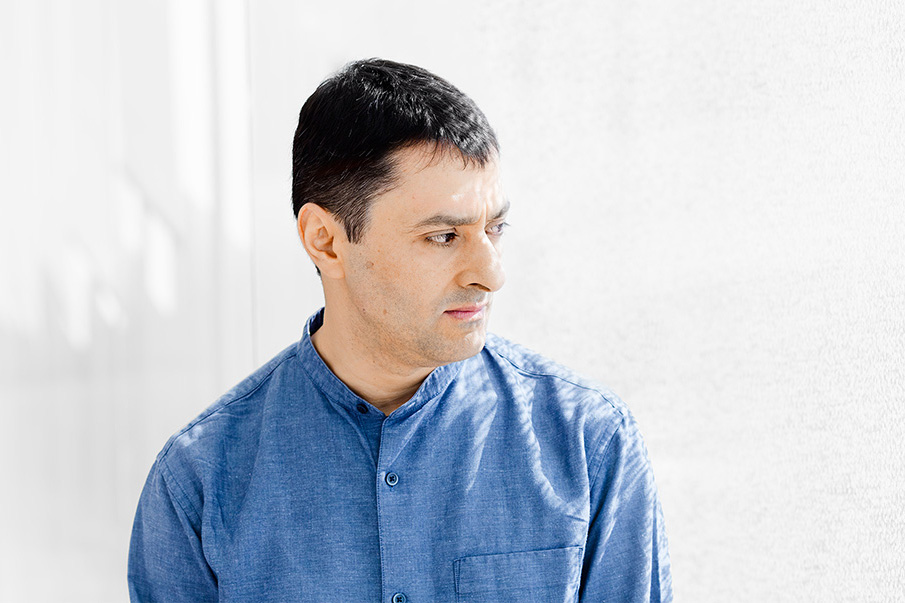
I am a Palestinian American writer. My essays have appeared in Best American Essays 2025 and other publications. I am the recipient of grants from the Kone Foundation and the Finnish Arts Promotion Centre. My first novel, The Beach Camp, is set in Al Shati refugee camp in Gaza. I am also at work on Inheritance, an essay collection about displacement and the landscapes we carry from one life into another. I write about memory, home, and what it means to belong to a place you can no longer reach.
WRITING
Books
The Beach Camp (novel, forthcoming)
A boy grows up in Al Shati refugee camp in Gaza, where violence is both intimate and structural, where surviving means becoming an asset, a fighter, a provider. He escapes through achievement and performance, first in the camp, then in the Gulf, then in America, learning at each border that worthiness must be constantly earned and re-earned for systems that were designed to deny him regardless. The performance that saves him also destroys him. By the time he can name what displacement did to him, it has already shaped how he loves, how he fathers, how he enters a room. The novel follows him from the camp to fatherhood, where he holds his daughter and confronts the question the whole book has been asking: if you are displaced from birth, can you ever truly arrive anywhere? Or is displacement a permanent condition, inherited and passed forward? Currently undergoing major structural edits with support from a grant by the Finnish Arts Promotion Centre.
Inheritance (essays, forthcoming)
A collection of essays examining what fractured and healed societies pass down to their people, and what those people choose to pass forward. The essays move between Gaza, where I was born into Al Shati refugee camp and inherited the logic of emergency, and Finland, where I now live and encounter daily the evidence of a society that survived its own wars and chose to invest in peace, equality, and the unhurried existence of forests. In Palestine, olive trees live for centuries because they bear fruit; people's graves do not survive because they are bulldozed and erased. In Finland, graves carry names from the 1700s, but forests are harvested every few decades. Each society can be read through what it allows to grow old. The collection is organized around paired inheritances: orchards and forests, cemeteries and schoolyards, production and purposelessness, the reflexes of a boy who grew up as one of nine siblings fighting for visibility and the confidence of his children who walk into rooms as if rooms were made for them. Supported by a grant from the Kone Foundation.
Essays
- "Zeppole (Aka Awama)" — Your Impossible Voice / The Best American Essays 2025
- "Clotheslines" — Your Impossible Voice
- "The Embassy" — Your Impossible Voice
- "Om Qasem" — Typehouse Magazine
- "Friends In Blood" — Amarolla Literary Magazine
Honors
- The Best American Essays 2025
- Kone Foundation Grant
- Finnish Arts Promotion Centre Grant
- Pushcart Prize Nomination
- Best of the Net Anthology Finalist
WORKSHOPS
Something is in the works. I have been thinking about the kind of space I want to create, what it should feel like, and who it is for, and I am getting closer to having answers. Details about upcoming workshops will be shared here soon.
122/6 Almashtal St.
When my wife showed me her childhood photos, I thought of my own and realized I had none. Thirteen years away from home, three major moves, from Gaza to Abu Dhabi to Dubai to Houston, and I carried no physical trace of my history.
I recruited one of my young nieces to do a task for me: go through our house in Al Shati refugee camp and scan whatever family photos she could find. She negotiated a price. I agreed. She found boxes and albums that belonged to my father, and more that belonged to my Uncle Marwan. I told her to scan everything. She digitized nearly three thousand photos.
Our house had no address, or so I thought for most of my life. In the camp, homes had numbers and streets had no names. When I was twenty-eight, living in Houston and filing paperwork for my parents' immigration petition, I asked my father for his work address. He told me to use the house. I asked him what address that was. He said, 122/6 Almashtal St. This was the number assigned to the plot of land where a tent once stood, recorded in United Nations files. I had lived my whole life in a house with an address I never knew. I started using it on every official document, with pride.
I uploaded the photos to a cloud account and shared the link with my brothers and my uncle, scattered across countries. They thanked me. No one clicked the link.
During the genocide, our house was flattened to the ground. My family survived. They talked about returning to the rubble to dig for the photo albums. I told them I had the photos and shared the link again. This time, everyone went through them, again and again.
PH.01
Scroll